Sunday, March 11, 2012

Could we Experience a Food Shortage? Apis mellifera, Colony Collapse Disorder, and What it’s Doing to Our Food Supply


What would you eat if there were no more almonds? What about no more blueberries? Well you could probably survive without those two foods, but now also take out sunflower seeds, pumpkins, cherries, cucumbers, apples, plums, apricots, nectarines, peaches, peas, macadamia nuts, pears, strawberries, mandarins, oranges, mangos, lemons, limes, avocadoes, watermelon, and zucchinis. Suddenly a well-balanced diet is a hard thing to achieve. The food pyramid or current “Choose My Plate” campaign (Image at right http://practicalbio.blogspot.com/2012/01/newest-food-pyramid-choose-my-plate.html) from the US Department of Agriculture (http://www.choosemyplate.gov/) are missing huge components that we have been told our entire lives are so important. Many key nutrients, like vitamins and minerals that are important to healthy living are no longer available through the foods we’re consuming.


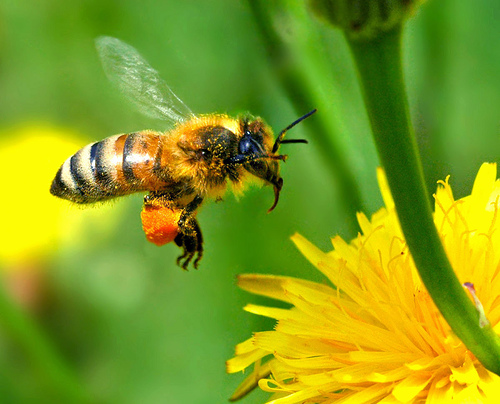
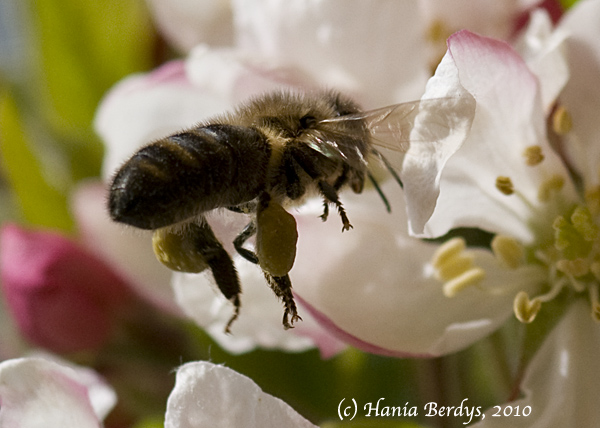
You’re probably thinking, “Well yeah, that would be bad, but it’s not going to happen. We’re not going to lose a large portion of our fruits and vegetables and nuts. Are we?” The unfortunate reality is that it could happen. No, it’s not a terrorist attack on our food supplies and it’s not anything that we could have anticipated that will be systematically taking out all these foods, one at a time. But what do these foods have in common? One thing. All of these are predominantly pollinated by the honey bee, Apis mellifera. Since the winter of 2006/2007 Colony Collapse Disorder (CCD) has been a phenomenon occurring in honey bee populations across the United States (Grunewald 2010; Shultz 2007). The most baffling thing about this is that there are no bee carcasses to be found and studied. When a bee is sick or knows that it is dying, it will leave the hive so as not to potentially hurt any other bees. This leaves scientists to study hives that are in the process of collapsing, where bee keepers are seeing a decline in their population size (Shultz 2007).

For those of you who don’t like fruits or vegetables and don’t see their loss as a concern, what about the other products and foods that we regularly use and could be disappearing due to CCD; things such as alfalfa (Image at right http://www.mallorcaspirit.com/Alternative_Medicine_directory/Alfalfa.html), cotton, peanuts, rapeseed, and soybeans (Morse 2003). These field crops are also bee pollinated and at risk for great losses of we lose the honey bees.


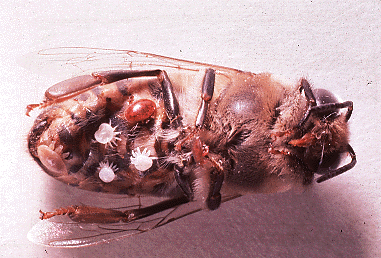
The next logical question would then be, “What’s the cause of CCD? If we know the cause then we can stop this from happening.” The issue with this simple and straightforward solution is that there is not a single specific known cause of CCD. The issues of CCD cannot be solved with simple and straightforward. There are numerous theories, many of which have strong supporting information, but not one lone cause. The PBS show Nature did an episode in October of 2007 that helped to detail what CCD was at the time, where the phenomenon was projected to go and some of the possible causes of CCD (http://www.pbs.org/wnet/nature/episodes/silence-of-the-bees/video-full-episode/251/). One of these theories is the increased use of pesticides and more specifically insecticides. (Image at left http://historyoftech.umwblogs.org/) Bees consume pollen and nectar as well as carry it to their hives as food for their young and if there are pesticides in and on the flowers where they are obtaining the pollen and nectar, they may be getting poisoned both internally and externally. The increased use of pesticides in the US and around the world may have simply hit a point where the pesticides are causing changes in honeybee behavior, ultimately leading to their death, or the pesticides themselves could be causing the honey bee deaths (Grunewald 2010; Shultz 2007). Another very common theory is that honey bees may be suffering from a virus that suppresses their immune system, causing them to be more susceptible to other potential causes. The belief is that the virus may work similarly in honey bees as HIV does in humans (Shultz 2007). A third theory that is widely popular is that CCD is caused by a mite called Varroa destructor which physically feeds on the adult honey bee and also on honey bee larva by positioning themselves in larval cells within a hive (Ellis and Zattel Nalen 2010). (Image below http://www.beekeepingadvice.co.uk/tag/varroa-destructor/).
For those of you who don’t like fruits or vegetables and don’t see their loss as of concern, think also about the species diversity that will be lost if we lose the honey bee. It’s not just foods that we would lose, but honey bees are also the primary pollinators of many native plants. Honey bees don’t just give us what we need to grow our food, they are providing an important and essential ecosystem service. Without the honey bee, many species of plants would not become pollinated thus, without human intervention they too would die. If we lose the pollination ecosystem service of the honey bees it would take artificially hand pollinating all our crops like many Chinese do for their pear trees since the loss of honey bees in that part of the world (Shultz 2007).


If the loss of food crops, species diversity, and the ecosystem service of pollination are not enough to convince you that we should take steps to protect the honey bee, maybe the economic impacts will. Research conducted in 2006 and published in 2007 by Cook et al. (http://www.esajournals.org/doi/full/10.1890/06-1632.1) completed a model that showed the benefits of excluding Varroa destructor (Image at left http://www.sel.barc.usda.gov/acari/content/varroidae.html) from the continent of Australia could save that country between $16.4 and $38.8 million USD a year for each of the next 30 years (Cook et al. 2007). Even taking the most conservative number of $16.4 million USD/year, for their estimated period of 30 years, that’s a total of $492 million USD.


The ultimate question that you’re probably now asking is “With all this loss of money and species diversity, what can I do?” I believe that there are 3 key things that everyone should consider doing (with the understanding that not everyone can do them all, but we can all do something) to help the honey bees. First and foremost become knowledgeable. Read, listen, analyze, and seek out those who can answer any questions that you don’t know the answer to and don’t know where to find the answer. The second thing that you can do is to start your own colony (Image at right http://katyoparty.wordpress.com/) or bee garden. Starting a colony is not for everyone, but it is the most direct technique that a person can embrace to help the honey bees. There are many great resources online, including thedailygreen.com which has a do-it-yourself guide for beginners who are interested in starting their own bee colony (http://www.thedailygreen.com/environmental-news/latest/diy-backyard-beekeeping-47031701). If having your own backyard colony isn’t your idea of a pet project, a bee garden might better suit you. Bee gardens support native bee colonies by containing flowers that bloom throughout the spring, summer, and fall and can also provide a diversity that bees appreciate. The third thing that you can do is to become a honey bee advocate. Take the knowledge that you have gained and share it. Just as Dr. Seuss’ character of the Lorax spoke for the trees, you can speak for the bees. Humans need the support of other humans to make large achievements in the ecological world and most humans won’t support something that they don’t understand. If you can share the importance of the honey bees and the potentially devastating effects of CCD, we can help the greater population to know about how special these animals are to human survival and the survival of our world.

“If bees continue to disappear at the current rate, honey bee populations in the United States will cease to exist by the year 2035.” Silence of the Bees, Nature.

References

Cook, D. C., Thomas, M. B., Cunningham, S. A., Anderson, D. L., De Barro, P. J. (2007). Predicting the Economic Impact of an Invasive Species on an Ecosystem Service. Ecological Society of America, 17(6), 1832-1840.

Ellis, J.D. and Zettel Nalen, C. M. (2010). Varroa mite-Varroa destructor Anderson and Trueman. University of Florida. 10 March 2012. <http://entnemdept.ufl.edu/creatures/misc/bees/varroa_mite.htm#eco>.

Grunewald, B. (2010). Is Pollination at Risk? Current Threats to and Conservation of Bees. GAIA, 19(1), 61-67.

Morse, R. A. and Calderone, N. W. (2003). The Value of Honey Bees As Pollinators of U.S. Crops in 2000. Pollination 2000. 4 March 2012. <http://www.beeculture.com/beeculture/pollination2000/pg1.html>.

Shultz, D. (Writer). (28 October 2007). Silence of the Bees [Television series episode]. In D.Schultz (Producer), Nature. New York City, New York: Thirteen/WNET New York’s Kravis Multimedia Education Center.

The buzzing workers of the global economy


Think back to what you ate this morning for breakfast. Toast and Jam? Maybe some coffee and fresh fruit, or perhaps some granola with almonds. Chances are you sat down, checked your e-mail and enjoyed your food without ever contemplating what it took to bring you your tasty morning routine. It is estimated that one in three bites we consume are directly related to honey bee pollination and of the crops requiring pollination for yields, it is estimated that honey bees are capable of pollinating 96% of those. From there we look at another startling figure; Bee pollination results in a direct input of an equivalent 36 billion U.S. dollars annually into the global economy.

It is surprising to realize that we as a species rely so heavily on pollinating insects such as Apis. Melifera for our food resources and yet even now, as you sip your coffee and read this text, bees are dying by the hundreds of thousands. Entire colonies are being wiped out, their workers abandoning their hives and disappearing. This new phenomena that was identified around 2006 has been dubbed Colony Collapse Disorder (CCD) and has been a rising hot topic in the realm of ecology and agriculture. Colony Collapse Disorder has seen 36% of bee colonies go extinct every year for 6 years in a row now. Luckily, bee farmers are very good at replacing "dead outs" within their colonies and so as a whole our number of colonies hasn't dropped since 2006. The problem however is that these beekeepers are losing a third of their crop a year, every year. Imagine if you were a farmer and lost a third of your crop every year for six years; How long could you keep it up? How long could you continuously recoup your losses and keep pressing on while trying to feed your family, pay your mortgage, and still have a little on the side for savings?

Compounding the problem is that we know very little about what specifically is causing CCD. We know that mites such as the Varroa and Tracheal are putting extensive stress on the colonies. We also know that the bees are getting infected with a pathogenic gut microbe as well as other viruses. The problem is we've identified and known about these stresses for much longer than the recorded colony collapses that are current; So the question becomes why are bees suddenly succumbing to diseases that they've learned to cope with previously?  


In a recently published article (January 2012) a biology professor at San Francisco State University by the name of John Hafernik made a startling discovery when a dead bee he'd collected erupted with fly larvae. Professor Hafernik had collected some deceased bees for future study, however being absent minded he left the vial of bees in his office. What he found was a complete shock, several fly larvae burrowing their ways out of the bee carcass and devouring it from the inside out; This never before recored phenomenon has provided some new answers to the global CCD question.

"Honeybees are among the most studied insects of the world... We would expect that if this was a long term parasite of the honeybees, we would have noticed" Hafernik said, exemplifying the relative novelty of this pathogen. What's even more surprising is that when Honey Bee colonies in the bay area of California were sampled, roughly 77% of them came up positive for this new fly parasite. New studies have done multiplicative pathogen accounts and come to the conclusion that it is not one simple thing that causes CCD in a hive, however multiple aspects or stresses that are causing the collapse of honey bee colonies globally. It is perhaps possible that with the infest of mites, parasitic flies and general bacterial pathogens honey bee colonies are just simple unable to cope with the amount of stress; And as a result are failing catastrophically. Hafernik's lucky find has helped propel the ball forward on understanding CCD, however we still know very little about this phenomena and until we can fully understand this ecological disaster we will have no hope of preventing it.

If we are unable to solve this colony collapse that honey bees are currently experiencing we will not only lose a convenient and cost effective way pollinate our food crops, bees also play a major role in the general health of our ecosystems. Since it's colonization by western Europeans, North America has lost over 99% of it's natural prairie lands due to habitat destruction and re-purpose, habitat fragmentation, and pollution. Ecologists are currently underway to restore and protect these unique, diverse, and critically endangered habitats; And in their efforts they've stumbled into one of the answers to these declining ecosystems. It seems that fragmented and isolated prairies have severe pollinator deficiency. These grasslands as a result have fewer seed and pollen yields resulting in a less stable and resilient biota as well as a significantly less diverse region.
Because most native plant species do not require a specific pollinator in order to propagate efforts are currently underway to provide these dying ecosystems with efficient pollinators such as Honey bees and Mason bees, which are some of the best pollinators on the planet. The problem now is that bees are in just as much danger as these prairies are and it's becoming more and more difficult to maintain consistent bee colonies for restoration projects. In order to secure our habitats and our own food bio security we must first save the real workers that make it all happen; Bees.

A quote by a man on the forefront of the fight to save the bee colonies health and future in our environment puts it all into perspective.

"Pollinators are canaries in the coalmine, and their disappearance is a referendum on the state of our environment -- a reminder of the brilliant and frightening interdependence of our ecosystem." --Dennis vanEnglesdorp

Dennis VanEngelsdorp said it best; Bees are clearly an essential aspect of our environment and are so integrating into our way of life that to lose them to CCD would yield a grim future where we're all impacted. Bees provide us with an invaluable ecosystem service and to fund their restoration now will save us billions of dollars in the future. Perhaps it's time to work for the bees as they have worked for us. Perhaps it's time to give back and help out the humble bee that brought you your coffee this morning. Because lets face it, you wouldn't have read this far if you hadn't had your morning brew.


Relevant Links:

Link to Dennis vanEnglesdorp's TED page. Read his bio and watch his video, it's fascinating.
http://www.ted.com/speakers/dennis_vanengelsdorp.html

The story of the San Francisco professor and his parasitic fly.
http://blogs.scientificamerican.com/observations/2012/01/03/zombie-fly-parasite-killing-honeybees/

The role of bees in prairie restoration
http://conservancy.umn.edu/bitstream/60215/1/8.1.Moncada.pdf

General information about CCD from the USDA
http://www.ars.usda.gov/News/docs.htm?docid=15572

Saturday, March 10, 2012

A Plague to Remember: The Untold Story of The Oak Trees

Photo from here
Photo from here

By Clinton French

        Oaks trees such as the black oak, the white oak, and the live oak are monuments in ecosystems. Many different organisms rely on them for home and food. In fact, Black and White oaks are what land markedly decide where Oak savannas can be in Western N. America and without them, Oak savannas in in Oregon and many other places could not exist. The Live Oak on the other hand is just majestic and beautiful in the way it grows. It grows in many places and is appreciated as an iconic tree. These trees were once pristine and untainted, but now a plague is upon them.
Photo from here
        The Plague I am referring to is called Sudden Oak Death(Phytophthora ramorum) or SOD for short. SOD is a water mold that popped up within the last 30 years. And this water mold reproduces by spore, or more specifically by two types of spores. It has two spore types for transmission and they are resting spores(chlamydospores) and swimming spores(zoospores), which do as they sound. The resting spores have the ability to last through harsh winters, while the swimming are motile and fragile and use water as a means to spread their disease with ease. This water mold with its spores at the ends of it is pictured to the right.
Photo from here
Photo from here


     SOD is a disease that kills and infects many species, but it effects no other species like it does Oaks. SOD has devastating effects on Oak trees. Once infected, a oak tree gets cankers, which are the bleeding looking things on the left, and the “bleeding” eventually discolors bark and kills said area, like in the picture to the right. This disease then has about a 50/50 chance of killing an oak tree flat out, as found in "Responses of oaks and tanoaks to the sudden oak death pathogen..." where it is said that mortality rates of various oaks range from 2.4% to 5.1%, while the infection rates range from 4.1% to 10.0%. From there, it makes the remaining population of oaks susceptible to other forms of death, such as beetle infestation. Thus, SOD has an effective kill rate of higher than just 50% since it opens trees up to infestations and such. If it were an infection between just oaks, then the problem wouldn’t that hard to solve, because the infected individuals could just be removed, but this is not the case.
Photo from here
        SOD has many other species of plants that it can infect, such as California bay laurels, Douglas firs, Rhododendrons, evergreen huckleberries, coast redwood, big leaf maples, and many others. Most of these species that get infected have a very low rate of mortality, but they do experience dieback (shown in the picture to the left). These species act as carriers or hosts to that disease and are used to spread the disease far and wide in their areas of growth. The rate at which they spread is so high that within a year SOD has spread as far 35km from the nearest known path of SOD in California(Meentemeyer, R et al, 2008). The California laurel has been the main reason for the spread of SOD in California, but it doesn’t exist in Oregon as abundantly as it does in California, so it thankfully wouldn’t have as much of an effect as it does in California when it spreads to Oregon.
        One of the other main things that has amplified the spread of this disease is that fact that SOD is an introduced pathogen. If it were native, then the pathogens effectiveness would be severely diminished, for the plants it effects would have had some time to evolve to have resistance to the disease. Oaks have had not time to obtain resistance, because 30 years is a short amount of time for an oak tree. SOD emerged in the last 30 years and it is theorized to have been a mix between two exotic pathogens that were probably from Asia. Also, this pathogen is not found in Asia, for the exotics from which it comes have not been tracked down, but they could feasible be tracked down given enough time and information.
        Another contributor to the problem is that conifers are more fit than Oaks. When a space is opened up in a forest, the space is usually filled with what is representative of what is around it. Thus, as Oaks decline, conifers replace them, for they are more prevalent. Thus making it so that oaks are able to be slowly pushed out as SOD creeps further in. This is tree in California now and will be in Oregon if SOD is allowed to spread into its borders further.
        There is no cure for SOD. With that being said, there is a treatment. This treatment is Phosphonate and it is injected into trees. The injection acts as a booster shot and makes it so that the trees thicken their cell walls so that the water molds spores cannot penetrate them, as is explained in "Protecting trees from Sudden Oak Death before Infection". It’s a pretty simple fix, after all, if the spores cannot get in, then they cannot kill. This Phosphonate can also be used to prolong the life of an already infected tree. Also, it has a long term cost that comes with it. The Phosphonate needs to be administered every 2 years, for that is the effective length of the dosage recommended.
        Currently, the only legislative counter measures have been to regulates nurseries. Theses regulations were put in place to slow the spread of SOD, because SOD was spreading rapidly to new populations due to nursery host plants being transported to new areas from California, which is how it probably got to curry county. There are groups such as suddenoakdeath.org which encourage people to become active in this rapidly growing problem.
        As I see it, SOD is a plague unto the populations of oaks everywhere it is present, and as it stands now, there is only one county in Oregon where the dreadful pathogen has been found, while it is rampant in 14 of California’s counties. In order to protect the Oaks in Oregon, something must be done, or else the marked decline oaks is upon us. So, it is my suggestion that a barrier of Phosphonated trees be created both at the border between California and Oregon and around curry county which is the only county in Oregon with SOD As shown in the diagram below. But the Phosphonate must be applied to more that just Oak trees for it to be a barrier, since other trees, such as Douglas firs and big leaf maples, can contract the disease as well. Also, Phosphonating an oak tree is essentially just applying a booster shot to it, so it should have the ability to be applied to other trees and have the same or very similar results. Now by applying the before mentioned barrier with all trees being Phosphonated, then an effective barrier is formed in which a line of immune trees. This barrier will keep the disease contained such that the disease will run its course in the contained area and the uninfected population will remain uninfected.
        This course of action or some course of action very similar will need to be taken or else the marked decline of oak trees is upon us, for SOD is the plague that could end oaks forever.


Citations:

Information:

http://www.suddenoakdeath.org/   

http://en.wikipedia.org/wiki/Sudden_oak_death
 
http://anrcatalog.ucdavis.edu/pdf/8426.pdf     

http://kellylab.berkeley.edu/storage/papers/2010-McPherson-etal-FEM.pdf 

Meentemeyer, R. , Anacker, B. , Mark, W. , & Rizzo, D. (2008). Early detection of emerging forest disease using dispersal estimation and ecological niche modeling. Ecological Applications, 18(2), 377-390.
 
Ellis, A. , Vaclavik, T. , & Meentemeyer, R. (2010). When is connectivity important? a case study of the spatial pattern of sudden oak death. Oikos, 119(3), 485-493.

Images:(In order of occurrence from left to right, then down)

Photo from http://www.haltonhelps.com/Tree%20hunt/photo%20contest%201%20white%20oak%20lavecchia.jpg

Photo from http://v2.cache1.c.bigcache.googleapis.com/static.panoramio.com/photos/original/37284941.jpg?redirect_counter=2

Photo from http://www.suddenoakdeath.org/wp-content/uploads/sod_imports/images/Pram.parke.jpg

Photo from http://upload.wikimedia.org/wikipedia/commons/1/1a/Sudden_Oak_Death.jpg

Photo from http://cisr.ucr.edu/images/sudden_oak_death_01.jpg

Photo from http://www.jgi.doe.gov/News/SODbay101.jpg

The last diagram was created by me, the author.

Wednesday, March 7, 2012

Save the Bees!


Pollination is the most spectacular and beautiful process ever evolved from nature. I mean sure, it is simply the transfer of pollen from the anthers of a flower to the stigma of the same flower or of another flower. But in all honesty, it is so much more.


Louie Schwartsberg is a famous cinematographer who focuses on the pollination behaviors of multiple pollinating organisms. In his film The Hidden Beauty of Pollination, he shows exactly why pollinators are equally as majestic as the nimble ballerinas in Tchaikovsky's Swan Lake. Watch at the 3:00 minute mark in Louie's TED talk to see a part of his film.

In the winter of 2006, a strange phenomenon occurred within the honeybee populations in the United States. Without any warning, millions of honeybees disappeared from their respective hives. Not only were there no bee carcasses to be found, but also it was the worker bees that were disappearing. The lack of worker honeybees developed unstable honeybee hives, thus starting the most serious, die-off of honeybee colonies across the country. Scientists have called this occurrence Colony Collapse Disorder (CCD), which has resulted in a loss of 50-90% of individual beekeeping colonies across the United States (Chen 2007). Indicated by Reed Johnson from the South Slough National Estuarine Research Reserve, CCD is also characterized by delayed robbing and slower than normal invasion by common pests such as wax moth and small hive beetles. The hindrance to the invasions by these pests indicates there could be a parasite or disease affecting the honeybee populations.


Dennis vanEngelsdorp is an acting state beekeeper for Pennsylvania's Department of Agriculture. He is studying CCD and an outspoken advocate for urban beekeeping. He gave a TED talk, in which he says,

“Pollinators are canaries in the coal mine, and their disappearance is a referendum on the state of our environment -- a reminder of the brilliant and frightening interdependence of our ecosystem.”

Dennis makes a point that this recent bee phenomenon is a warning of danger or trouble yet to come. Similar to the canaries that warned miners of hazardous gases such as carbon monoxide, the disappearance of the honeybee is a sign that our ecosystem is in peril and that we as scientists have to do something about it!


Before we get into the research that has been done to determine what is causing the die-off of the honeybee, let us first get a firm understanding of Colony Collapse Disorder. First of all, CCD is an idea; it is a combination of unanswered guesses for why the bees are disappearing. To reiterate, Colony Collapse Disorder is a syndrome that is characterized by worker bees abandoning their hive. This is a recent phenomenon where large numbers of honeybees mysteriously die off due to unexplained factors. Some ideas for why the bees are disappearing include malnutrition, pesticides, parasites, and possibly climate change. For example, researchers believe the reason honeybees are decreasing in survivorship is due to the loss of variation in their food. Scientists have found that bees fed pollen from a range of plants showed signs of having a healthier immune system than those eating pollen from a single type (Osgathorpe 2011).


A lot of the prairie lands and old growth forests are being lost due to increased development of pastures and urban areas. The loss of biodiversity in plant life can be fatal for honeybee populations. The BBC wrote an article on the loss of biodiversity and how it maybe linked to the honeybee decline. The main issues they bring up in this article is that in contemporary society, the world has large areas of monocultures, which has been a fairly major change in what pollinating insects can forage for. I mean, just imagine, it was only 50 years ago that the agricultural industry safeguarded their crops by growing more than one crop in a field, as insurance against pest outbreaks or severe weather. Indirectly, this was helping the bee populations, since they were pollinating more than one species of crop during this period. In fact several agricultural scientists have arrived at a general consensus that modern agriculture confronts an environmental crisis. A growing number of people have become concerned about the long-term sustainability of existing food production systems. Modern agricultural techniques bring up a whole other can of worms, but it still shows that bees can be affected by the monocultures our country is built upon.


Scientists theorize that Colony Collapse Disorder may cause the next big extinction. This is because honeybees pollinate and pollination is an essential part of a stable ecosystem. Bees fly from stamen to stamen to collect pollen, to then spread to neighboring plants that can then accept the pollen, which allows the plants egg to develop into a source of food or shelter. This life cycle is vital for not just humans, but for all living organisms. To have a healthy terrestrial ecosystem, the plant, soil, and atmosphere must have beneficial or at least commensalistic interactions. In a community with CCD infected honeybees, there can be significant loss of plant life. For example, detritivores exist within a community to decompose dead material and this decomposition resupplies the soil with nutrients. If after a generation or two of lower honeybee populations, there would be less pollinated flowers, thus less fruit. In a local population sense, this would mean there would be a lower amount of fruits to decompose by the detritivores, which overall means there are fewer nutrients returned to the soil. That is just one simple example, but to imagine a whole country without pollinating bees would impact many other factors nationwide, such as photosynthetic levels. This is due to fewer seed set and plant growth, thus less carbon dioxide being converted into oxygen and organic compounds. In the big scheme of things, this would affect the atmosphere and the soil. It is hard to believe that every single thing in this world is connected, but these are just two examples that show that even a honeybee can affect the terrestrial environment.

If honeybee populations continue to fall this could potentially cost billions of dollars in the agriculture industry. Honeybees have estimated value of about $15 billion dollars in the United States, and over $215 billion dollars worldwide. It is estimated that one-third of the food eaten by U.S. citizens is thanks to honeybee pollination, either directly or indirectly. Not to mention that honeybee pollination plays an important role in pollination of other plants that are vital to maintaining an ecological balance (VanEngelsdorg 2009).


Since 2006 scientists have been trying to find some explanation for the disappearance of honeybees, but even after 6 years the data has come out inconclusive. There are many suspected causes for CCD, such as malnutrition, pathogens, immunodeficiency, pesticides, and genetically modified crops. Most researchers agree that while the exact cause of CCD remains unknown, it must be multiple factors working together that are causing the most serious die-off of honeybees ever reported. Albert Einstein once said, “If the bee disappears from the surface of the earth, man would have no more than four years to live. No more bees, no more pollination … no more men!” Nationwide there is an urgent plea for more funding and research to sustain the honeybee populations and now it rests in scientists hands to save the earth from possibly the next big extinction.


Work Cited:
1. Osgathorpe, L. M., Park, K., Goulson, D., Acs, S., Hanley, N. (20011). The trade-off between agriculture and biodiversity in marginal areas: Can crofting and bumblebee conservation be reconciled? Ecological Econmoics. 70 (6) 1162-1167
2. Johnson, Reed M., Evans, J. D., Robinson, G. E., and Berenbaum, M. R. (2009). Changes in transcript abundance relating to colony collapse disorder in honey bees (Apis mellifera). Proceedings of the National Academy of Sciences of the United States, 106 (35), 14790-14795
3. Greenleaf, Sarah and Kremen, C. (2006). Wild bees enhance honeybees’ pollination of hybrid sunflower. Proceeding of the National Academy of Sciences of the United States of America, 103 (37), 13890-13895.
4. Chen, Y. and Evans, J. D. (2007). Historical Presence of Israeli Acute Paralysis Virus in the United States. Virol, 251 (82) 207-217
5. VanEngelsdorg, Dennis, Hayes, J., and Petti, J. (2009). A Survey of Honey Bee Colonies Losses in the U.S. Between September 2008 and April 2009. Science, 318 (5848) 283-287

Salmon are everywhere: why salmon matter and how metapopulation perspectives can help


            Salmon are everywhere. That’s the problem; and the beauty of salmon.  Salmon species use every part of a river system from headwaters to massive rivers out into the ocean.  That’s why salmon are the “canary in the coal mine” for the health of our ecosystems.  When the whole system is healthy, salmon thrive. But as parts of that system are degraded or connections lost, salmon that might be “everywhere” aren’t.  

            From wilderness areas and managed forests through small rivers meandering across farm-filled valleys into large rivers that pass through cities and past dams, salmon touch upon a wide array of human enterprise. That’s why salmon are everywhere in the newspapers as well.  Perhaps not on the front page, but if you start noticing the not-front-page news, you begin to notice that that efforts to save salmon have wide-reaching consequences.  

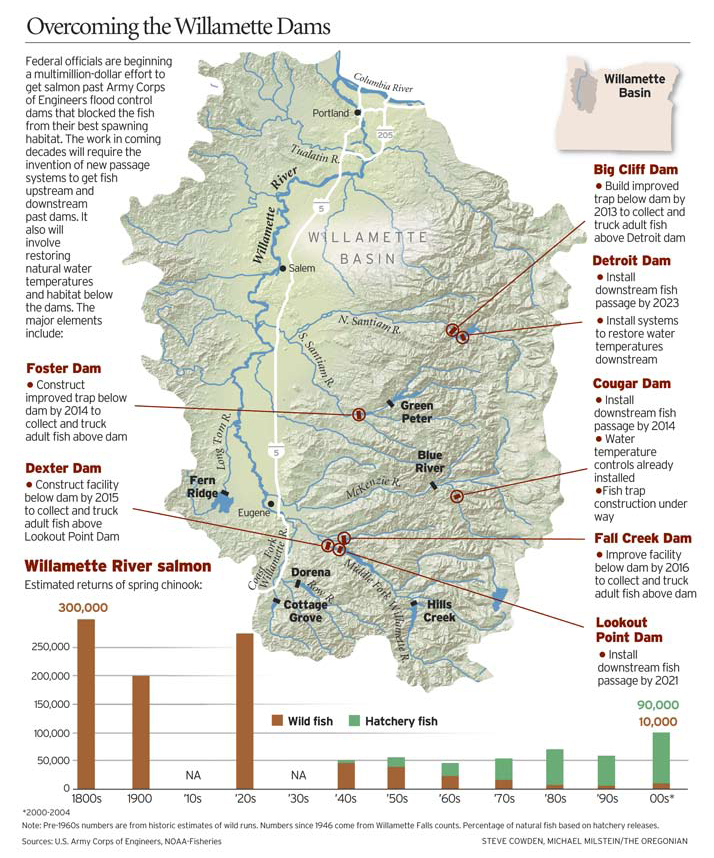
            While populations of Pacific salmon may be healthy across much of their range, (in Alaska and Russia), populations along the West Coast have seen sharp declines.  These declines led to listings of species as threatened or endangered under the U.S. Endangered Species Act during the 1990s.  These listings are leading to government regulations and an enormous mobilization toward the goal of recovering salmon.  Whether you realize it or not, you’re contributing to this effort when you pay your power bills.  From 2000-2009, the Bonneville PowerAdministration that administers the dams supplying our electricity have spent $108–178 million/year on direct expenses toward fish projects and have incurred $12.6–397 million/year in lost opportunity costs due to mandated changes in dam operations to assist salmon passage.  That’s a lot of money!  

            Past the front page, you begin seeing more stories of the rippling effects of salmon.  This past fall, two different dams, once impassable for salmon, were removed in rather spectacular fashion.  In January, the Oregonian newspaper trumpeted theColumbia River Trust’s acquisition of a 920acre farm adjacent to the river; the dykes that once protected the farm will be removed and flooded fish habitat created.  Last week, a judge threw out the state of Oregon’s river temperature standards approved by the EPA.  Why?  The temperature standards were deemed insufficient for salmon that need cold water.  It’s a decision that could significantly impact farmers, businesses and timber operations. 


             Outside the Pacific Northwest, places that still have abundant salmon are fighting to keep it that way.  Bristol Bay in Alaska is home to the most valuable salmon fishery in the world.  Bad news for salmon: a massive deposit of gold and copper was found in the headwaters and one of the biggest open pit mines in the world has now been proposed for.  An Olympian struggle has ensued between residents and the proposed developers.
 
            Not only is Bristol Bay home to an invaluable sockeye fishery, the rivers feeding the bay have been the focus of one of the best, long-term monitoring programs of salmon population dynamics.  And what has been learned in Bristol Bay about salmon metapopulation dynamics is providing critical insights for conservation efforts in the Pacific Northwest.


            But first: metapopulations? What are those? If you’re a basketball fan and you hear the prefix “meta,” the first thing that might come to mind is the basketballplayer formerly known as Ron Artest. I’m not sure if the newly minted Mr. Metta World Peace cares at all about salmon, but naturally functioning metapopulations can also contribute to harmony and stability.

            A “population” is a group of organisms of the same species that interbreeds given their overlap in space and time.  For salmon, a population is defined by the river in which the salmon spawn and the timing of their spawning.  A “metapopulation” is a collection of populations which are partially isolated but can exchange individuals.  Within a metapopulation, individual populations may go extinct but these locations may be recolonized. Metapopulations may display emergent properties such as stability distinct from the properties of the contributing populations which may themselves be unstable.

            As a species, salmon are perfectly suited to be understood in terms of metapopulations.  In a 2007 concept paper, Schtickzelle and Quinn outlined how salmon fit the three criteria for the metapopulation concept: habitats associated with populations must be discrete (you can’t have habitats and their associated populations grading seamlessly from one to another); while habitats must be discrete, there must also be dispersal between populations to allow for recolonization; finally, the dynamics of local populations must not be synchronized, they can’t behave identically.  

            Salmon meet all of these criteria. Populations are associated with discrete habitats, stretches of gravel beds beneath shallow water suitable for spawning separated by miles of unsuitable river habitat.  And while salmon are famous for “always” returning to the birthing stream, thankfully, some make mistakes.  They take a wrong turn.  That’s called “straying.”  It sounds bad, as if these salmon had failed the one fundamental test of being a salmon, but it’s these prodigal salmon that may be the recolonizers of populations about to blink out.

            Back to Bristol Bay.  The University of Washington investigators and affiliated researchers who have been gathering this data recently published articles in Nature and Conservation Letters synopsizing key findings and implications of their past decade of research (Schindler et al. 2010, Moore et al. 2010). They use an analogy from economic theory, the “portfolio effect.”  That is, a portfolio of investments performs best and minimizes risks when its holdings are diverse.  

            Bristol Bay is fed by nine major rivers.  Each of these rivers has monitored salmon returns for more than 50 years.  And in addition to monitoring at river outlets, one system, the Wood River, has seen monitoring of individual streams.  In 2003, Ray Hilborn and colleagues documented an interesting phenomenon: key rivers such as the that once dominated the Bristol Bay fishery through much of the 20th century declined precipitously in the 1990s whereas other rivers that had been minor contributors grew by leaps and bounds in salmon productivity.  However, while all of these rivers were going up and down, the Bristol Bay fishery as a whole, the metapopulation, remained stable. One might expect salmon populations within this ecoregion to behave similarly since they are all experiencing a similar climatic regime.  But the investigators point to the “biocomplexity” of salmon life histories: some spawn on sandy beaches, others in large cobble beaches and others in gravel streambeds.  Each river is unique and associated salmon populations with their unique life histories respond differently to region-wide changes in climate.

            Rogers and Shindler (2008) pushed this further by demonstrating that even within a single river system, the Wood River, there was no more correlation in annual salmon productivity among streams close to each other than between the Wood River as a whole and rivers on the other side of this vast bay.  Asynchrony reigns!  And that’s a good thing.  If all of the populations went up and down together at the same time, the metapopulation would be vulnerable to a crash.  Biocomplexity and asyncrhrony confer resilience, a portfolio effect.  

            Bristol Bay provides an example of how a natural metapopulation is “supposed” to work.  The worrying thing is that in the highly altered systems of the Pacific Northwest, evidence suggests that salmon populations are becoming more synchronized with time (Moore et al. 2010).  Dams that homogenize river flow regimes and straying hatchery fish may be facilitating this synchronization.

            Focusing on the Willamette River basin, Fullerton et al. (2011) explore the effects of dams, habitat degradation and hatcheries on metapopulation structure by using a modeling method called graph analysis, a formal way to assess what might otherwise look like doodles and back-of-the-napkin drawings.  Circles represent populations and their size.  Lines between circles represent connections among populations (immigration/emigration) with line thickness representing the degree of exchange.  The overall structure of the metapopulation is represented in graphical space with the x axis representing increasing connectivity between populations and the y axis representing increasing variance in population size. 

              Graph models reveal historic Chinook and steelhead metapopulations as falling between “classic” or “Mainland-island” metapopulation structure, that is, having moderate connectivity and either roughly equal population sizes (“classic”) or highly variable population sizes (“Mainland-island”).  Remember that key criteria for metapopulations are discrete habitat patches and some limited dispersal between patches, criteria that would be characterized as moderate connectivity.  The modeled dam scenario consistently reduced connectivity between populations leading to a “nonequilibrium” metapopulation state.  “Nonequilibrium” is not a good thing:  with less connectivity, vulnerable populations are less likely to get reinforcements.  In contrast, in the hatchery scenario, the high straying rates for hatchery fish led to increased connectivity.  The resulting structure might be described as “patchy” or “panmitic” with so much flow between populations that the metapopulation acts as one big population with everyone in step.  A model that combined dams, hatcheries and habitat degradation, our current state of affairs, displayed metapopulation structure with low connectivity and variance in population size, again the “nonequilibrium” state.

            Why are metapopulation perspectives important?  A metapopulation perspective can help us assess issues like connectivity and asynchrony among populations, permitting evaluation of whether our actions are moving salmon metapopulations toward or away from resiliency and stability.  Metapopulation perspectives are being used by the government agencies to shape strategies for recovering salmon; metapopulation analyses will be used to determine when a salmon metapopulation listed under the ESA is “out of the woods” and can be de-listed as no longer threatened.  Conservation organizations are also using metapopulation perspectives to prioritize populations for conservation, the portfolio in which they will invest.  

            Salmon are “everywhere” throughout our river systems.  But unless we’re living in the natural wonder of a place like Bristol Bay, we rarely see salmon, and it’s unlikely we have a sense that salmon are everywhere.  In places like the Willamette Valley, populations are on the ropes due to a myriad of human alterations.  However, using lessons from natural systems and metapopulation perspectives to develop restoration strategies, it’s possible that salmon populations may eventually rebound and metapopulation resiliency restored.

Images

1.  Ben Knight. http://ourbristolbay.com/photo-gallery.html

2.  Ryan Peterson. http://pool32mag.blogspot.com

3.  from  Schindler et al. (2010)

4.  from Hilborn et al. (2003)

5.  from Fullerton et al. (2011)

6.  Steve Cowgen, Michael Milstein. The Oregonian. http://blog.oregonlive.com/news_impact/2008/10/dam.jpg
 
References

1. Fullerton, A.H., S.T. Lindley, G.R. Pess, B.E. Feist, E.A. Steel, and P. Mcelhany. 2011. “Human Influence on the Spatial Structure of Threatened Pacific Salmon Metapopulations.” Conservation Biology.

2. Hilborn, R., T.P. Quinn, D.E. Schindler, and D.E. Rogers. 2003. “Biocomplexity and Fisheries Sustainability.” Proceedings of the National Academy of Sciences 100 (11): 6564.

3. Moore, J.W., M. McClure, L.A. Rogers, and D.E. Schindler. 2010. “Synchronization and Portfolio Performance of Threatened Salmon.” Conservation Letters 3 (5): 340–348.

4. Rogers, L.A., and D.E. Schindler. 2008. “Asynchrony in Population Dynamics of Sockeye Salmon in Southwest Alaska.” Oikos 117 (10): 1578–1586.

5. Schindler, D.E., R. Hilborn, B. Chasco, C.P. Boatright, T.P. Quinn, L.A. Rogers, and M.S. Webster. 2010. “Population Diversity and the Portfolio Effect in an Exploited Species.” Nature 465 (7298): 609–612.

A REASONABLE AMOUNT OF SALMON


A reasonable amount of salmon is what we have been trying to achieve since 1991 when salmon were first listed as endangered. Salmon, by far, have to be one the most selfless creatures I may have come across. They spend their entire life working towards a single important moment, giving birth. All salmon leave their birthplace at a juvenile age to head to the ocean only to return a few years later to those same streams and rivers as their spawning grounds. Here’s an interesting fact, wild salmon always return to their birthplace after maturing in the ocean and as we see in the above picture some species of salmon change colors when they’re spawning. Their body color is silver when they’re in the ocean but once they return their faces are is blue/green and body is a pink/red color! They dodge predators, fight against water currents, and man-built obstacles such as dams, all for the purpose of giving back to their ecosystem. They’re like ninja fighters we see in movies who will do anything for their master, and in this case the environment.

Salmon face many dangers at various life stages. The Chinook salmon for example have the following life cycle:
                    
For the purpose of simplifying the stages a bit when there’s a mention of the term juvenile, it encompasses the alevin and fry stage. At all stages the salmon are vulnerable to both biotic and abiotic limiting factors. Limiting factors in this context mean anything that may affect the population size, the growth, and distribution of the salmon.  A few of the abiotic and biotic factors that salmon face are temperature, stream flows, predation and disease, and migration barriers.


REDD
First and foremost is the egg stage. Salmon eggs are found in streams/gravel beds. A redd (salmon egg) requires relatively cool water temperatures and high levels of dissolved oxygen. Soil erosion, due to extreme logging practices increases sedimentation which leads to rising water temperatures as the sediment absorbs the heat given off by the sun. This reduces the amount of dissolved oxygen in the streams. Other factors that lead to high water temperatures are low stream flows and removing vegetation from the stream bank.  Secondly, high stream flows or flooding can lead to scouring (washing away of gravel beds).


ALEVIN
The mortality rate for the salmon is during their transition from redd to alevin is great as predation by birds and insects reduces the survival rate majorly. Also, fungal infections lead to death of many.  Once the redd have developed into alevins, they are faced with similar limiting factors as at the redd stage, such as the presence of fine sediment. Fine sediment can suffocate the gravel beds by reducing dissolved oxygen and they prevent the young alevin’s movement out of the gravel beds.


FRY
At both the alevin and redd stage the salmon have a yolk sac attached to provide nutrition, but once they transition to the fry stage they become predators. Fry form territories in shallow pools and fight for their preferred habitats against other fry. At this stage the salmon require a healthy habitat with lots of vegetation as the number of predators increases. Abundant vegetation aids the fry in providing various hideouts from their predators.  Whereas increased sunlight can lower the oxygen concentrations, decreased sunlight due to reflective sediment leads to reduced aquatic plant growth. 


SMOLT
There are two limiting factors as the fry move into the estuary and become smolts. First being man made barriers such as dams and secondly natural barriers such as a dried up streams. At the smolt life stage the salmon go through a process known as smoltification. Smoltification causes physiological changes in the fish to help it to adapt to the salty ocean water at the later life stage. Smolts are found in estuaries. Estuaries provide food, shelter and growth to these fish. An unbalanced estuary habitat can lead to a very low survival rate for the adults moving out to the ocean as they develop.


ADULT SALMON
At adult stage once the salmon have entered the ocean they fall prey to various species despite their camouflaged outer layer. Their largest predator being, us, humans. Salmon have little to no defenses against human predation. Various salmon species spend a huge range of time out in the ocean. As for Chinook, they spend about 3-5 years. After this time period the salmon head back for the native streams, lakes, or rivers. Little is understood about the mechanism that leads these salmon back to their birthplaces, but it is believed that the use their chemical memory and the olfactory system to guide them back home.  They head back to the same estuary and go through smoltification in order to adjust to the freshwater.  Once again the health of the estuary is crucial to the survival of the adult salmon. The water temperature, salinity, and pollutant levels all play a role in determining whether an estuary is healthy or not. Once they begin to move upstream adult salmon face the biggest barrier of all, man-made dams.  Also, they fall prey to humans, otters and bears at this stage. 

SPAWNERS
Once they have reached their spawning site, the female salmon spend several days preparing a nest site which can be as large as nine feet. At this point we see some competition between females for a  healthy nest and between males for the females’ attention. The male, then, moves closest to the female to have the best odds at fertilizing eggs.


All this work and effort to return to the place they were born, just to reproduce?  Yes! and No! That is not all these salmon do, but reproducing is their grand, final, goal of life. As I said before they are the ninja fish who are here to give back to their master (the ecosystem), and that is exactly what they do. Soon after they have completed spawning, these salmon DIE! I know! Isn’t it a bit shocking and sad? Now you must be thinking how in the world are they going to give back to the ecosystem if they’re dead? Well they actually may have already given back, as many salmon become prey to other species. Yes! Salmon actually help feed around 40 different species in Alaska, alone. Also, if they were one of the lucky ones and survived their life cycle journey; by reproducing they will be providing more salmon for the bears, birds, seals, etc. Where ever there are healthy salmon runs, we find larger populations of other species as well. Particularly, brown bears to which salmon are a main source of food. Brown bears help fertilize terrestrial ecosystems by adding phosphorous to them which is retrieved from their salmon diet. Also, once these salmon die after reproducing, their carcasses provide nutrients and energy for the biota in that stream. Salmon during their lifecycle bring biomass and nutrients from the sea to the freshwater and terrestrial ecosystems.

So my question to you is WHY don’t we care about salmon? After all they have provided for us and the effort they put in to enrich our ecosystem. Why are they still present on the E.S.A. (Endangered Species Act) list? Why despite all the efforts and investments, that have gone into rebuilding or conserving salmon we are unable to return to the salmon populations as they were 20 years ago?

The answers to these questions lie right in the salmon life cycle. Now you must be thinking that the salmon being an essential food source for many is bound to be reduced in numbers. When, really predation by others apart from humans is just a small facet to this dilemma. The biggest reasons that salmon aren’t returning to their historical population sizes are the 4 H’s:  harvest, habitat, hydropower, and hatcheries.  All four of these factors are greatly influenced by humans. The growing population of our country and world has led to growing demands for food. Mass harvesting is one of the first reasons that led to endangerment of salmon. Secondly, habitat is greatly affected by our growing industries. Agriculture and logging practices affect the habitat for salmon and many other species. The deforestation has led to soil erosion which causes sedimentation in shallow pools and streams reducing the dissolved oxygen levels, which are fundamental for juvenile salmon survival. Also, the growing conventional agriculture practices have led to water contamination through pesticides which affects the salmon olfactory system which is critical for salmon to return to their native streams. Thirdly, the building of dams has greatly affected the ability of salmon to return home as many dams do not contain fish steps to help the fish migrate upstream. This causes death of many salmon before they are able to complete their life cycle and reproduce as they exhaust all their energy in trying to overcome this obstacle. Lastly, hatcheries which are believed to rebuild the salmon population are doing the opposite. The hatchery fish are genetically different from the wild salmon and unable to adapt to the natural habitat and if mating occurs between a wild and a hatchery fish, this significantly reduces the chances of those eggs to survive their life cycle and return to reproduce. So, though we believe we are increasing the chances of salmon eggs to survive by keeping them in controlled environments in hatcheries, we may actually be reducing their chances of survival. Not only that, we are putting the wild salmon populations at risk as well.

So, how do we fix this? Like much of the other arising environmental issues in our recent times. We must learn to consume less! I know it sounds so foreign, since we are bombarded with daily messages of how we should consume more and more. I feel like that’s how our generation is coming to be recognized, as consumers. Let’s put a stop to this MEME! In order to return the salmon to its historical size as a population we must also return to our historical selves and become more self-sufficient and consume A REASONABLE AMOUNT.

WANT TO LEARN MORE ABOUT SALMON? WATCH THIS GREAT DOCUMENTARY ON PBS!
http://www.pbs.org/wnet/nature/episodes/salmon-running-the-gauntlet/salmon-lifecycle/6559/

Images

http://articles-for-all.blogspot.com/
http://html.trrp.net/implementation/sediment_management.htm
http://seymoursalmon.com/images/lifecycle/alevin.jpg
http://www.yourfishingtipconnection.com/my_files/images/salmon_fry_2.jpg
http://www.planet-science.com/media/29341/atlantic%20salmon%20pre-smolt
http://swittersb.files.wordpress.com/2008/08/chinook_salmon.gif


Resources


1."Why Is Salmon Conservation Important?" Wild Salmon Center. Web. 06 Mar. 2012. <http://www.wildsalmoncenter.org/about/whySalmon.php>


2. "Salmonid Life Cycle." Center for Social and Environmental Stewardship. CFSES, 2005. Web. 3 Mar 2012. <http://www.cfses.org/elearning/tutorial.htm>.


3.United States. NOAA. Pacific Salmon & Steelhead: A Natural Wonder. C.A.: , 2010. Web. <http://swr.nmfs.noaa.gov/recovery/salm_steel.htm>.


4. "Salmon running the gauntlet: Salmon lifecycle." PBS. Thirteen- Educational Broadcasting Corporation, 2011. Web. 3 Mar 2012. <http://www.pbs.org/wnet/nature/episodes/salmon-running-the-gauntlet/video-full-episode/6620/>.